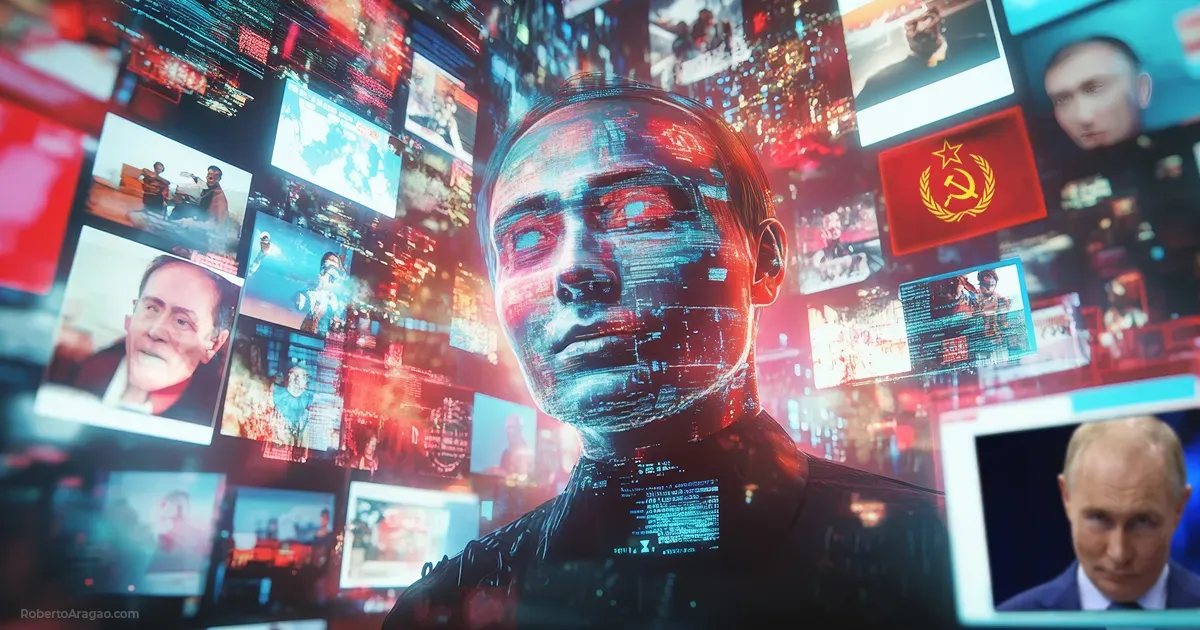
a man with digital face

From Innovation to Isolation: Russia Digital Sovereignty and the Death of a Tech Dream

Imagine waking up in a world where the internet is no longer a tool of freedom and discovery, but a tightly fenced yard, where every click is monitored, and every message may come with consequences. For millions of Russians, that reality is no longer a dystopian concept—it’s today’s digital routine. This new environment is a direct reflection of Russia digital sovereignty, shaping the digital landscape in unprecedented ways.

The Russian government has been steadily dismantling its open tech landscape and replacing it with a homegrown, heavily monitored ecosystem. This is not just about banning apps or tweaking some internet policies. It’s a complete restructuring of how Russians live, work, and communicate online.

The strategic shift towards a controlled internet is a cornerstone of Russia digital sovereignty, aiming to limit foreign influence and bolster domestic security.

The Rise of Max: Russia’s “Super App” with a Super Agenda

At the center of this transformation is Max, a so-called “everything app” developed by VK Co., a Kremlin-controlled social media giant. Think of it as a Russian hybrid of WhatsApp, PayPal, and Google Services—but with zero privacy and a government backdoor baked into every tap and swipe.

Why now? Well, Russian President Vladimir Putin has been inching toward a Chinese-style model of digital sovereignty for over a decade. But since Russia’s full-scale invasion of Ukraine in 2022, this ambition has gone full throttle. Meta’s apps like Facebook, Instagram, and WhatsApp have either been banned or are next in line. Even TikTok has pulled back on services in Russia, leaving a digital void the Kremlin is eager to fill.

Enter Max—a tool designed not just for convenience but for control. Need to text a friend, pay your electricity bill, or check into a concert? Max does it all. And guess what? It doesn’t have end-to-end encryption. This means every byte of your digital life is accessible to authorities.

As one expert described it: Max isn’t just a service; it’s “an electronic cop.”

Cutting the Cord on Global Connectivity

The Russian internet isn’t being reimagined—it’s being amputated from the rest of the world. In July alone, the country experienced 2,591 mobile internet shutdowns, a stunning increase from just 654 in June. The official explanation? To “counter drones.” The real message? Dissent is dangerous.

To make things worse, Russia has outlawed VPNs, started fining people for searching banned topics, and criminalized online pro-LGBTQ content and anti-war sentiments. Imagine getting years in prison for a Facebook post. That’s not a slippery slope—it’s a cliff dive.

The Tech Brain Drain: When Talent Packs Its Bags

It’s not just apps and platforms disappearing—people are too.

More than 100,000 IT professionals left Russia in 2022. That’s around 10% of the nation’s tech workforce, and experts say the real number is likely higher. These weren’t just code monkeys—they were the dreamers, developers, and innovators behind companies like Yandex, Russia’s former tech darling.

Yandex was the Google of Russia. It built a sleek search engine, launched ride-sharing apps, and even competed globally. But after the invasion of Ukraine, the walls started closing in. Its executives resigned, its stock was frozen, and its news platform became a state propaganda machine. Eventually, Yandex had to split itself in two—one side for Russia, and the other scrambling to survive abroad.

A Sovereign Web, or a Digital Prison?

The Russian state’s obsession with digital sovereignty—building a self-reliant, self-contained internet—echoes the Great Firewall of China. Domestic alternatives are cropping up everywhere: RuTube instead of YouTube, Yappy instead of TikTok, RuStore instead of the App Store.
A worker in protective gear operates equipment in a high-tech facility illuminated with yellow lighting. The headline "Russia Faces Loss of Digital Sovereignty" is overlaid on the image in white text, with "The Moscow Times" logo placed at the bottom center.

But here’s the catch: no innovation thrives in isolation.

Russia imports most of its tech components. With sanctions and trade bans, its chip industry is now 10–15 years behind global leaders. International firms like Oracle, IBM, and Samsung have pulled out. Domestic tech hubs like Skolkovo, once Russia’s attempt at creating Silicon Valley, are hollow shells of what they were supposed to be.

The government says it will invest over $41 billion by 2030 to revive its electronics industry, but that’s like filling a crater with a garden hose. No amount of rubles can replace the human capital and global partnerships it has lost.

The Unraveling of a Digital Dream

What’s tragic is that Russia once had a shot at real innovation. The tech sector was one of the few areas where merit mattered more than political connections. Developers launched startups, won funding from Silicon Valley, and brought pride to a new generation of Russians.

Now? The industry is “returning to the village,” cut off from global research, funding, and progress. Most tellingly, Russia launched a bizarre recruitment campaign for tech workers in exile—complete with a Times Square billboard saying “It’s time to go home!”

But why would they? Who wants to build the future in a place that’s obsessed with the past?

The TL;DR Takeaway

Russia is not just restructuring its internet—it’s weaponizing it. In doing so, it has destroyed its most promising sector, forced out its brightest minds, and built a digital iron curtain around its people. Max may be the Kremlin’s crown jewel, but it’s forged from the wreckage of freedom and progress.

For those outside Russia, it’s a cautionary tale: When governments treat technology as a threat rather than a tool, innovation dies—and so does trust.

a robot in a room illustrating ChatGPT Agent

The Future is Here: Meet ChatGPT Agent, Your New AI Personal Assistant

Imagine an assistant that can do way more than just respond to your queries — it can control your entire computer, handle your online shopping, analyze your calendar, and even whip up a full business presentation. Sounds futuristic, right? Well, the future is here, thanks to OpenAI’s newly unveiled ChatGPT Agent.

What Makes ChatGPT Agent Unique?

The buzz around ChatGPT Agent stems from its groundbreaking capabilities. Unlike traditional AI assistants that only chat, this powerful tool acts like a full-fledged “virtual computer,” autonomously handling complex tasks for users. It’s powered by a custom-built AI model designed specifically to integrate with your everyday digital activities.

Think about it:

  • Need dinner reservations coordinated with your calendar and OpenTable? ChatGPT Agent’s got your back.
  • Shopping for specific ingredients for a recipe? Just tell your AI assistant, and it will handle it from cart to checkout.
  • Drafting a detailed market trends report for your next big presentation? Leave it to the Agent.

OpenAI’s product lead Yash Kumar shared a perfect example: he automated his weekly parking requests for OpenAI’s San Francisco office using the Agent. No more Monday morning hassles — just smooth sailing.

Dynamic and Adaptable—But Patient

One of the standout features is its adaptability. Users can interact and modify the agent’s processes midway. Planning a date night and changing your mind about Italian to sushi? No problem — the Agent adapts instantly.

But it’s not just about flexibility. ChatGPT Agent excels in multitasking. It can manage multiple requests in parallel, keeping track of user preferences and goals. Let’s say you’re planning a birthday party — this tool can handle catering research, draft an invitation, and even coordinate with a gift registry. It remembers your previous inputs (temporarily), making interactions feel more natural and efficient.

However, patience is a virtue with this new technology. Tasks may take 10-30 minutes to complete, depending on complexity. Isa Fulford, OpenAI’s research lead, emphasizes this tradeoff is acceptable given the significant reduction in manual effort. The system works best as a background assistant—let it do the heavy lifting while you focus elsewhere.

Safety First

While the capabilities of the ChatGPT Agent sound almost too good to be true, OpenAI has built strong safety measures into its design. Irreversible actions like sending emails or making purchases always require explicit user confirmation. It also features “Watch Mode,” keeping a close eye on sensitive tabs like financial websites, adding an extra layer of protection.

OpenAI has also developed a list of restricted actions and websites, ensuring the agent doesn’t access sensitive financial platforms or perform risky operations without user input. The company has implemented a replay feature, allowing users to track what the agent did during tasks — a transparency tool designed for both security and peace of mind.

Where Can You Get It?

Initially, ChatGPT Agent is rolling out for Pro, Plus, and Team users, with Enterprise and Education users set to follow later this summer. European Economic Area and Switzerland users will have to wait, as it’s not yet available in those regions.

Users can access the Agent by activating “agent mode” in the tools menu or typing “/agent” in the chat bar. OpenAI plans to gradually increase usage limits and refine features based on early feedback. For now, Pro users get 400 agent prompts monthly, while other plans get fewer.

Industry-Wide Shift Toward AI Agents

The ChatGPT Agent is part of a broader trend toward AI-powered virtual assistants, inspired by Marvel’s J.A.R.V.I.S. Companies like Meta, Google, and Klarna are racing to develop advanced AI tools for seamless integration into daily tasks. Klarna, for instance, replaced two-thirds of customer inquiries with AI assistance, highlighting the potential for AI agents to streamline productivity significantly.

This trend marks a pivot from simple chat interfaces to autonomous AI systems capable of executing end-to-end processes. Tools like Anthropic’s “Computer Use” and Salesforce’s “Agentforce” show the momentum building around task automation. These tools not only offer cost-savings for businesses but open up possibilities for individuals to offload tedious chores.

The Potential — and Risks — of Autonomy

While ChatGPT Agent holds massive potential for productivity gains and simplifying digital tasks, experts urge caution. MIT Technology Review highlights concerns around granting autonomy to AI agents, citing potential for unexpected behaviors — like accidentally purchasing $31 eggs without explicit user consent — as occurred with one journalist’s experience.

Yoshua Bengio, a renowned AI researcher, warns of long-term risks if agents become too powerful without proper controls. The key concern? Agents may follow instructions too literally, misinterpreting vague goals or being manipulated through prompt injections — malicious commands hidden in everyday content.

There are also broader socioeconomic impacts to consider. As these tools become more capable, they could displace certain job categories, especially in areas like customer service, scheduling, and digital assistance. On the flip side, they may create opportunities for upskilling and entrepreneurship, enabling solopreneurs and small teams to operate more efficiently.

Looking Ahead: The Future of Human-AI Collaboration

As we navigate this bold new AI-driven landscape, ChatGPT Agent represents a massive leap forward in technology, promising efficiency, flexibility, and robust user control — all the ingredients needed to make our digital lives simpler, smarter, and more productive.

Moving forward, we can expect agents to gain more autonomy while still prioritizing user trust and oversight. Integrating memory, better reasoning capabilities, and industry-specific tools will likely be the next evolution.

Whether you’re an entrepreneur automating reports, a teacher coordinating lesson plans, or just someone who hates meal planning — AI agents like ChatGPT are poised to become your new best digital buddy.

Double Censorship: Russia Criminalizes Online Searches and Imposes Mobile Internet Blackouts

Digital freedom in Russia is under attack like never before. In a coordinated crackdown combining repressive legislation and strategic internet outages, the Russian government seems determined to tighten its grip on the country’s online environment. With a new law criminalizing the mere act of searching for “extremist” content and the growing imposition of mobile internet blackouts, experts warn: we’re witnessing the rise of a full-scale digital dystopia.

The New Digital Repression Law

Just last week, the Russian parliament passed a law that allows authorities to fine individuals who “deliberately” access content classified as “extremist.” The definition, vague and expansive by design, ranges from websites linked to terrorist organizations to materials from groups promoting LGBTQIA+ rights. The fine for individuals is around $65, but companies that provide or promote tools like VPNs — essential for bypassing censorship — could be hit with penalties up to $12,800.

According to internet freedom advocate Sarkis Darbinyan, the law is about more than censorship. “It’s an intimidation tool. The government wants people to be afraid even to think about searching for information outside the official narrative.” The main concern is the law’s subjectivity: how can authorities prove a user’s “deliberate intent” when accessing restricted material?

Surveillance at Full Throttle

Russia already requires telecom providers and platforms to store user data for extended periods. Under the new law, this information can now serve as legal evidence. The scope of surveillance includes browsing history, data from public Wi-Fi networks, and even personal device logs.

Ironically, even pro-Kremlin agents may be affected. Yekaterina Mizulina, head of a state-affiliated organization that monitors “extremist” content, warned that the law could disrupt her team’s work — since merely accessing banned materials might expose them to legal risk.

Internet Blackouts: The State’s New Weapon

Alongside the legislation, Russia is also experiencing a wave of mobile internet blackouts. The official justification is to prevent Ukrainian-operated drones from using mobile networks for attacks. Since May, over 70 regions have experienced disruptions — with 41 also facing broadband outages.

In Rostov-on-Don, near the Ukrainian border, locals are adjusting to the “new normal” of disconnection. Blogger Pavel Osipyan went viral for his satirical rap on the situation: “How do you know someone is from Rostov? Just check their signal bar.” His lyrics highlight everyday struggles like failed card payments, offline GPS, and pharmacies unable to process prescriptions.

Economic and Social Fallout

The consequences go far beyond personal inconvenience. Small businesses dependent on mobile networks and apps have seen significant drops in revenue. In rural areas with no wired internet alternatives, the situation is dire. In Belgorod, air raid alarms failed due to lack of internet — residents resorted to banging on metal rails to warn neighbors.

“Sovereign Internet” and the Kremlin’s Agenda

Since the 2022 invasion of Ukraine, Putin’s regime has accelerated efforts to build a “sovereign internet” — a network isolated from the global web and entirely controllable by the state. Platforms like Instagram, Facebook, and even YouTube have faced blocks and instability. VPN access is increasingly restricted as digital stores are pressured to remove them.

According to Access Now, normalizing digital repression is a dangerous path. “What’s presented as a temporary safety measure can quickly become permanent policy,” warns digital rights expert Anastasiya Zhyrmont.

A Digital Democracy in Decline

The current situation paints a bleak picture of online freedom in Russia. With punitive laws, institutionalized censorship, and relentless surveillance, the space for dissent and independent information is vanishing. Tools once used to protect anonymity and resist oppression are now criminalized.

Groups like Net Freedoms continue to expose how controversial laws are snuck into seemingly harmless legislation, bypassing public scrutiny and media oversight.

Conclusion: A Government-Ordered Offline Future

Russia appears to be following the path of countries like Iran and China, where digital liberties are severely curtailed. But unlike those regimes, Russia’s repression is more unpredictable — impacting even regions with no direct link to the war.

With increasingly broad laws and intrusive control measures, Vladimir Putin’s government is building an unprecedented infrastructure for censorship and digital repression.

As citizens adapt — some with creativity, others with resignation — the question remains: how long until free internet in Russia becomes nothing more than a distant memory?